
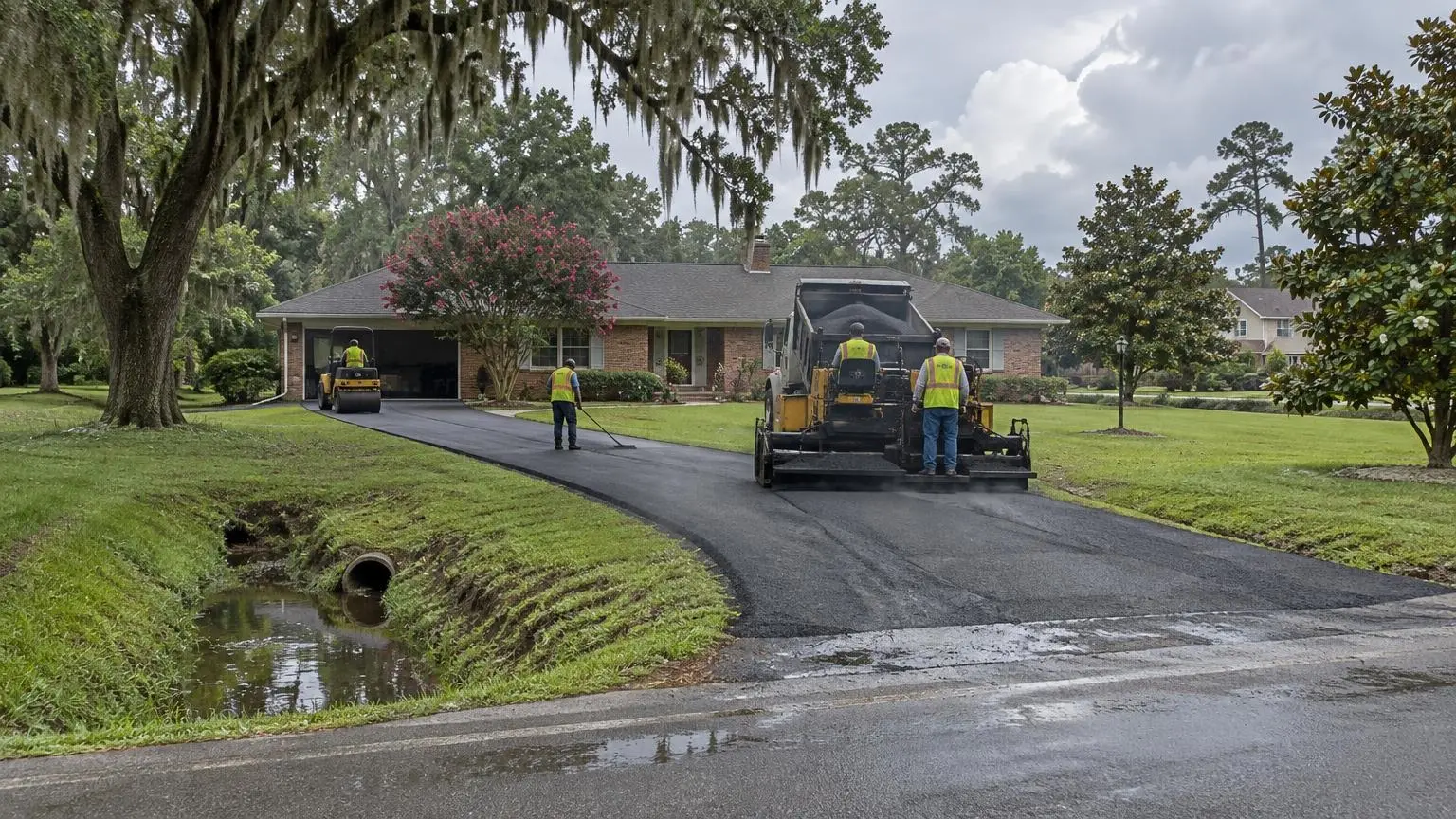
Driveways, parking lots and private drives across the Capital Region
Asphalt Paving in Baton Rouge, LA
New asphalt built for 60-plus inches of rain a year, plus the repair, sealing and striping that keeps it working.
- Free on-site estimates
- Itemized written quote with base depth and compacted asphalt thickness
- Driveway pipe, culvert and right-of-way permits sorted out before work is scheduled
Paving Where the Rain Never Lets Up
Asphalt paving in Baton Rouge is mostly about water. The city averages 61.94 inches of precipitation a year, which puts it among the wettest cities in the country, and the ground across most of the parish is flat enough that rain does not run off on its own. Add summer heat that has topped 110 degrees on record, soils that swell when wet and shrink when dry, and a pair of active geologic faults under parts of town, and you get pavement that fails fast when it is built thin or graded flat. Built with a proper base and a clear path for water, an asphalt driveway or lot here can give long service.
Rain, flat ground and ditches
Baton Rouge sits on the Istrouma Bluff, the first natural bluff upriver from the Mississippi River delta, but most neighborhoods away from the river are low and level. Rain falls on about 114 days in an average year, and summer storms can drop inches in an afternoon. Water that cannot leave the pavement soaks through cracks into the stone base, softens the soil underneath, and turns into ruts, potholes and alligator cracking under the next set of tires.
So drainage is designed in, not hoped for. We set cross slope so water sheets off the surface, keep the low end of the driveway from draining onto the garage slab, and look at where water goes once it leaves the asphalt. Across much of the parish that means an open ditch along the street, which means a driveway pipe under the apron. The August 2016 floods, when the Amite and Comite rivers reached record levels, were a reminder that ditches and pipes that are undersized or silted up send water back where it does not belong.
Soil that moves
A 2021 study of expansive soils in Louisiana found that the state's largest estimated losses concentrate in southern urban centers including Baton Rouge, and that shrink-swell soils crack streets, driveways and sidewalks as well as foundations. Clay-rich ground swells when wet and shrinks in dry spells. Asphalt is flexible, which helps, but it cannot bridge a base that is pumping or settling. Cost guides describe a typical residential section as 2 to 3 inches of compacted asphalt over 6 to 8 inches of gravel base, and 3 to 4 inches over 8 to 10 inches for heavier vehicles. Your quote states which section we are building, and where we find soft or organic soil, we dig it out and replace it with compacted stone before any asphalt goes down.
Faults under the pavement
The Baton Rouge fault and the Denham Springs-Scotlandville fault are both active. Their movement is slow, measured in inches per decade, but it shows up in pavement. A Louisiana Geological Survey field guide notes the Baton Rouge fault appears in parking-lot pavement near Nicholson Drive as a flexure of about 4 to 10 inches, and a local news report described a noticeable rise in College Drive where the fault crosses it. If your driveway has a crack that comes back in the same line no matter how often it is patched, we will tell you whether a fault trend is a likely cause. No paving method stops a fault, but knowing about it changes how a repair is planned.
Heat, humidity and timing
January lows here average about 42 degrees, so cold weather rarely stops paving for long, and the season is long. The challenges are the other way: July highs average close to 92 degrees, relative humidity averages almost 74 percent, and afternoon storms roll in fast. Hot mix has to be placed and compacted before it cools, rain on a fresh base or a fresh sealcoat costs a day of work, and new asphalt stays soft in summer heat. We schedule around the forecast, start early on hot days, and tell you how long to keep cars, trailers and kickstands off new pavement.
Permits at the street
Where your driveway meets the road decides whose rules apply. The City of Baton Rouge and Parish of East Baton Rouge list the addition or expansion of a driveway among the residential projects that need a permit. Driveway pipe across a parish ditch goes through the City-Parish culvert permit, which does not allow PVC or HDPE pipe under driveways and requires driveway pipe at least 24 feet long. A driveway that connects to a state highway needs an access connection permit from the Louisiana DOTD district office. Other cities in the region, such as Central, Zachary, Baker, St. George and Denham Springs, have their own processes. We sort out which applies at the estimate, and before any machine digs, we request utility locates through Louisiana One Call.
What a new driveway job includes
- Measuring, checking grade and drainage, and noting the ditch, pipe and road connection
- Removing old asphalt, concrete, shell or worn-out gravel
- Undercutting soft soil and replacing it with compacted stone
- Grading and compacting the stone base to the depth in your quote
- Placing and rolling hot-mix asphalt to the stated compacted thickness
- Finishing edges and transitions at the garage, walks and apron
- Care instructions for the first summer and a sealcoat timeline
Where We Work
We work across Baton Rouge and the communities around it. North of the city, Baker and Zachary sit on higher ground, Zachary at about 102 feet, with older streets and fast-growing subdivisions. To the east, Central covers a large area between the Comite and Amite rivers, with big lots and long driveways, and across the Amite, Denham Springs and Walker in Livingston Parish took some of the worst of the 2016 floods, when the Amite crested nearly 5 feet above its previous record at Denham Springs. South of the city, St. George, Prairieville and Gonzales are mostly newer subdivisions on flat, low ground where ditches and driveway pipes matter as much as the asphalt. Across the river, Port Allen in West Baton Rouge Parish rounds out the area. Each town page below covers what is particular to that community: its permits, its ground and its history. A paving company worth hiring will ask where your water goes before it talks price.
- Asphalt Paving in Baton Rouge, LA
- Asphalt Paving in St. George, LA
- Asphalt Paving in Central, LA
- Asphalt Paving in Zachary, LA
- Asphalt Paving in Baker, LA
- Asphalt Paving in Denham Springs, LA
- Asphalt Paving in Walker, LA
- Asphalt Paving in Prairieville, LA
- Asphalt Paving in Gonzales, LA
- Asphalt Paving in Port Allen, LA
- Asphalt Paving in Plaquemine, LA
- Asphalt Paving in Brusly, LA
- Asphalt Paving in Addis, LA
- Asphalt Paving in Merrydale, LA
- Asphalt Paving in Gardere, LA
- Asphalt Paving in St. Gabriel, LA
- Asphalt Paving in Livingston, LA
- Asphalt Paving in Watson, LA
- Asphalt Paving in Sorrento, LA
- Asphalt Paving in Slaughter, LA
- Asphalt Paving in Pride, LA
- Asphalt Paving in French Settlement, LA
- Asphalt Paving in Brownfields, LA
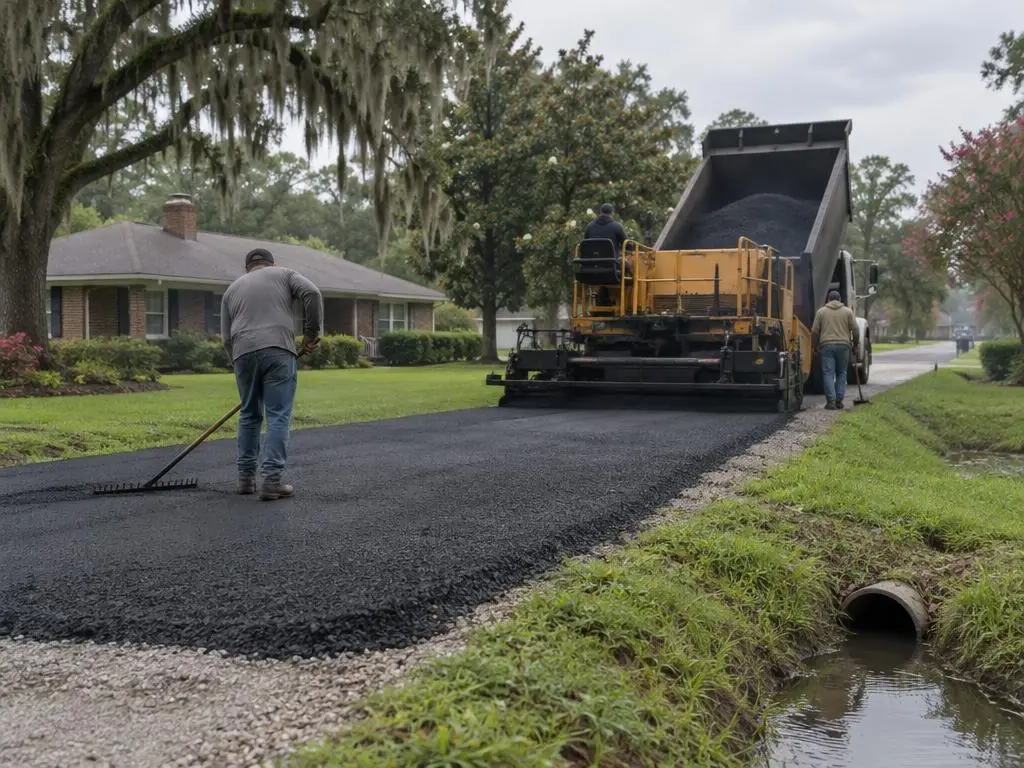
Common Questions
How much does asphalt paving cost in Baton Rouge?
National cost guides put new asphalt driveways at about $5 to $12 or more per square foot (HomeGuide) and $7 to $15 per square foot (Angi). Base work on soft soil, a new driveway pipe, removal and length all change the total, so we price your job in writing after the site visit.
How much does 1,000 square feet of asphalt cost?
HomeGuide lists a 1,000-square-foot asphalt driveway at roughly $5,000 to $12,000 nationally. A large commercial area costs less per square foot; HomeAdvisor puts parking lots at about $2 to $4.50 per square foot. Your written estimate reflects the actual base, thickness and access at your property.
What is asphalt paving, exactly?
It is placing hot-mix asphalt, a blend of crushed stone and sand bound with asphalt cement, over a compacted stone base and rolling it dense. The asphalt layer is only a few inches thick. The base and the drainage under it decide how long it lasts.
Why do driveways in Baton Rouge crack and pothole so quickly?
Usually because water gets into the base and stays there. Heavy rain, flat ground, soils that swell and shrink, and thin stone bases are the common causes. Sealing cracks early, keeping water moving off the surface and building a thicker base prevent most early failures.
Do I need a permit to pave my driveway?
Often, yes. The City-Parish lists adding to or expanding a driveway as work that needs a permit, a driveway pipe across a parish ditch needs a culvert permit, and a connection to a state highway needs a Louisiana DOTD permit. Cities like Central, Zachary and Denham Springs have their own rules. We confirm what your address needs before scheduling.
Can you pave over my old driveway?
If the old asphalt is still firmly supported and the cracking is surface-level, an overlay can work and costs less than replacement. If there are ruts, sunken areas or broken edges, the base has failed and new asphalt on top will crack in the same places. We check before recommending either.
When is the best time of year to pave around Baton Rouge?
Most of the year works, because hard freezes are short here. Dry stretches matter more than the month. Spring and fall are easiest; in summer we start early and plan around afternoon storms.
How do I compare asphalt paving quotes in Baton Rouge?
Check whether each quote states base depth and compacted asphalt thickness, what happens to soft soil, how the surface will drain, and who handles the driveway pipe and permit at the street. Two bids can match on price and differ on all of those points. Look up any contractor with the Louisiana State Licensing Board for Contractors before you sign.
Asphalt Services Around Baton Rouge
Six services that cover a driveway or lot from the first load of stone through the years of upkeep after it.
Asphalt Driveway Paving
New and replacement driveways on a compacted stone base, graded to drain and tied into the ditch and pipe at the street.
Learn more →Asphalt Repair
Potholes, broken edges, sunken spots and cracks repaired by fixing the base and the water problem behind them.
Learn more →Asphalt Resurfacing
A new layer of hot mix over worn but well-supported asphalt, for less than tearing it all out.
Learn more →Sealcoating
A protective coat that slows sun and water damage, applied after cracks are filled and timed around the rain.
Learn more →Parking Lot Paving
New lots, expansions and rebuilds for businesses, churches and apartment properties, graded to move a lot of water.
Learn more →Parking Lot Striping
Layout, restriping and accessible spaces painted to the 2010 ADA Standards after paving or sealcoating.
Learn more →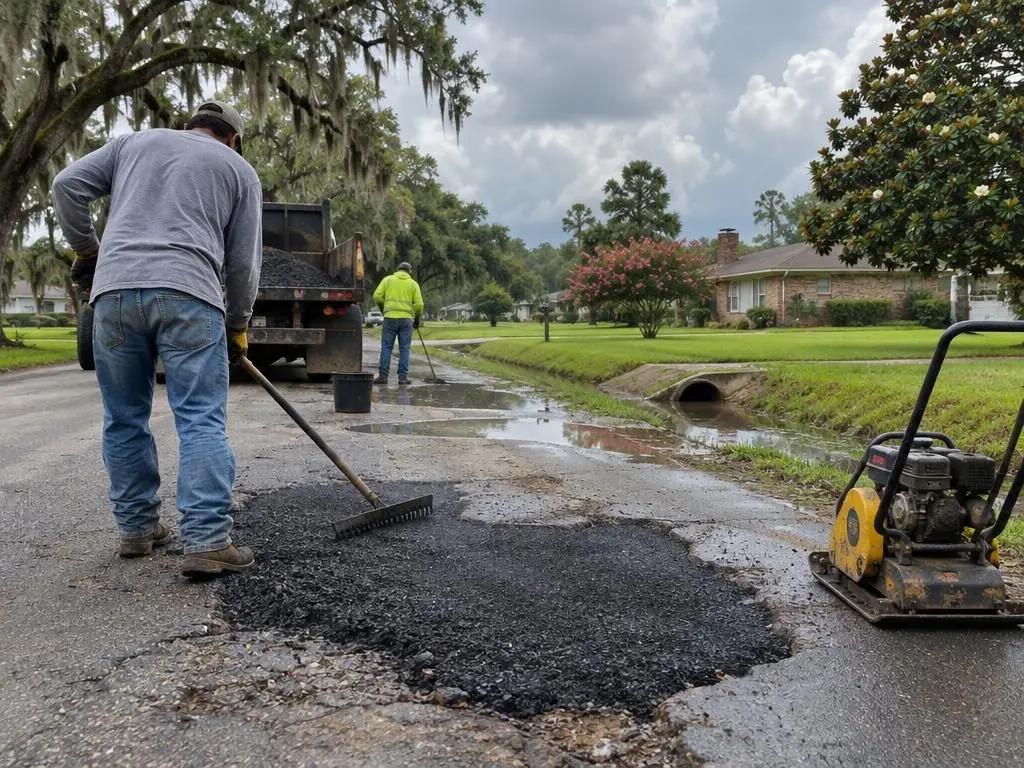
Why Homeowners Call Elite Asphalt Paving Baton Rouge
Drainage first
Cross slope, low points and the ditch at the street are planned before any asphalt is ordered.
Numbers in writing
Stone base depth and compacted asphalt thickness are stated for each area of the job.
Soft ground replaced
Soft or organic soil is dug out and replaced with compacted stone, not paved over.
Permits sorted early
We tell you whether City-Parish, a local city or Louisiana DOTD rules apply at your driveway.
Get an Asphalt Paving Estimate
Free on-site estimates in Baton Rouge and the surrounding parishes.